Are the Movie Adaptations of Pride and Prejudice Ruining the Book: Part II
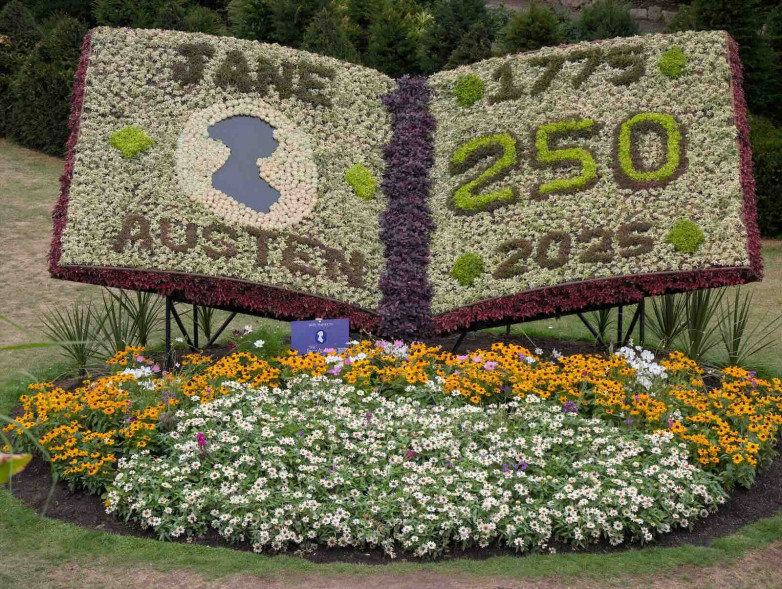
Parade Gardens, Bath, marks the 250th anniversary year of Jane Austen's birth



In this second of a two-part post to mark Jane Austen's birthday yesterday, screenwriter Heidi Lux looks at how film-makers have treated the author's most popular work.
The worst offender in terms of changing our perceptions of P&P by far is the 2005 Kiera Knightley version.
Before you mentally craft your angry DM, tensing at the mere thought that your favorite movie is about to be maligned, I don’t believe people shouldn’t like it. It’s not a bad movie. A lot of talented people put their back into it. You can like it. You can even love it.
As long as you don’t think this is the perfect example of Jane Austen.
When director Joe Wright signed on for the project, he hadn’t read the book. He hadn’t seen the BBC adaptation, and he was only familiar with the 1940 version. He accepted the project because the script made him cry and studied period dramas in preparation.
The Regency setting was once again changed, this time to a slightly less “WTF were they thinking” time period of the 1790s. The cinematography is picturesque, and the acting is Oscar-approved. It’s beautiful. It’s elevated. It’s artistic. But it’s not really funny. Or satirical. The costumes are all far too brown for that.
There’s passionate rain. There’s intense hand acting. There’s a silent clenched fist that says nothing but tells you everything. But there’s no trace of the voice a woman who would roll her eyes at such things so hard they’d get stuck.
The movie is fully of over-the-top romantic lines like, “You have bewitched me, body and soul,” which were absolutely not in the novel. But Hollywood put them there, so now they’re there, I guess. Google “Jane Austen quotes -ai” and it will pop up, fully attributed to her and not to Deborah Moggach who actually wrote it.
When we make alterations like this to the book, they become the book. Which becomes a problem when there’s no though to the fact that a) she did not write them, and b) she would likely be perturbed by them.
Austen’s early work was filled with making fun of melodramatic books that she loved but also hated. She once said that pictures of perfection made her sick and wicked, and now we’re twisting her into such a picture of perfection. We’ve replaced the satire with sentiment, and her spirit with schmaltz.
We need to remember that this is a woman who wrote multiple Richard jokes. Our literary genius who graces currency was immaturely delighted by the observation that a man’s nickname can also be a man’s body part. And honestly, it’s one of my favorite parts about her.
Ultimately, reducing proud unmarried woman Austen to romance, removing the sharp comedic wit reshapes our view of the authoress. As our world becomes increasingly more “online” to put it mildly (“illiterate” to put it sharply), and as we move away from a time period when references to carriages would be hot, topical takes, we move away from the books themselves. The movie versions become the definitive versions of a book more so than the book itself.
Punching up literature so it reads for a modern audience or taking artistic license to make literary moments more cinematic is understandable. But removing the writer’s voice from their own story is another thing entirely, especially when it shapes our perceptions of that writer’s work - so much so that it comes as a shock to an aficionado when presented with the writer’s real voice.
When we alter the artist, we risk removing their elan vital, the very thing that made us fall in love with the artist in the first place. 200 plus years later, Austen’s observations still hold up. Men continue to mansplain as much as Mr. Collins. Women continue to be as catty as Caroline Bingley. Austen remains relevant without need for alteration or sanitization.
Let’s respect the authoress for who she is. Let’s love what made us fall in love with her. And let’s not remove her from her own work.
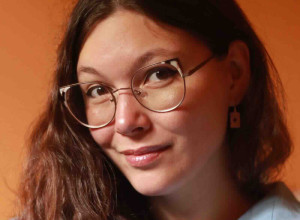
Heidi Lux is a screenwriter and satirist based in Los Angeles. Her feature Crushed is streaming on Tubi, and her work has appeared in McSweeney's, Reductress, The Belladonna Comedy, Business Insider, Eater and more.